How to Play Pokémon TCG: A Complete Beginner’s Guide
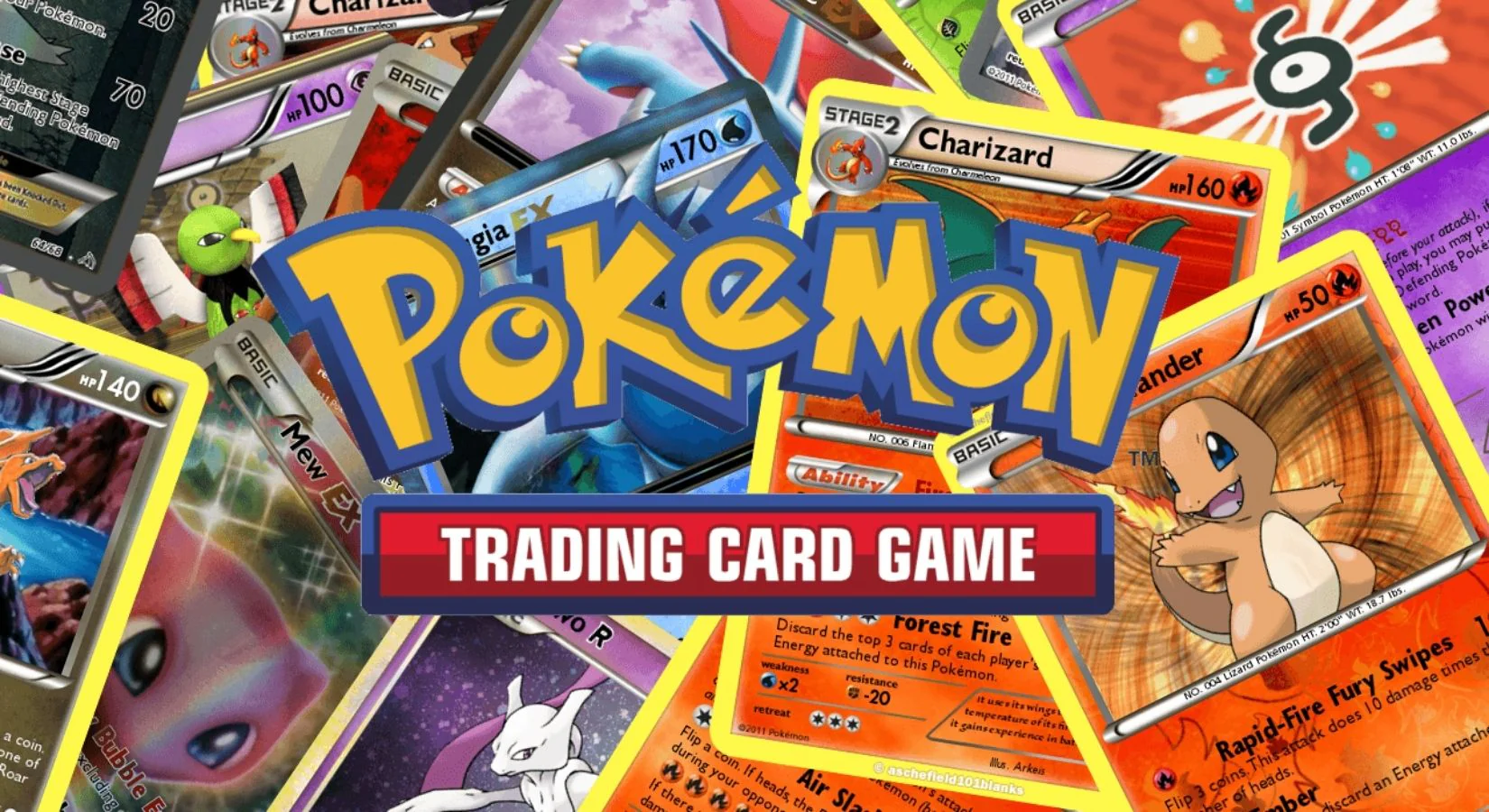
Pokémon Trading Card Game is a collectible card game where you build your own deck, play Pokémon onto the battlefield, attach Energy to them, use Trainer cards and try to defeat your opponent’s Pokémon. This article will guide you through the complete basics: what you need, what the play area looks like, how a turn works, how to win, where to practice and how to join other players.
Quick visual overview
At first glance, Pokémon TCG is a colorful collectible game, but underneath it has a clear structure: deck, play area, turns, Prize cards, Energy and gradual improvement of your strategy.
 Start simply: a deck, a table, Energy and your first practice game.Sleeves and a playmat protect your cards and make the play area clearer.
 Pokémon can be a game, a collection and a community hobby all in one.
What is Pokémon TCG?
Pokémon TCG is a card battle between two Trainers. Each player uses their own deck, sends Pokémon into play, powers them up with Energy and attacks the opponent. The goal is not only to collect beautiful cards, but also to think, plan, manage resources properly and use card combinations.
You build a deck, play Pokémon, attach Energy, use Abilities and attack.
You collect your favorite Pokémon, rare sets, illustrations, foil cards and special versions.
You play with friends, join leagues, tournaments, prerelease events or learn online.
What do you need to play?
Best products for getting started
| Product | Who it is suitable for | Why it is useful |
|---|---|---|
| Battle Academy | Complete beginners, children, families | Includes simple decks, guides and helps you understand the absolute basics of the game. |
| ex Battle Deck | Beginners who want one ready-made deck | A ready-to-play 60-card deck you can play with immediately. |
| Deluxe Battle Deck | Players who already know the basic rules | A slightly more advanced deck with a better strategy. |
| League Battle Deck | More advanced beginners and players aiming for tournaments | A stronger foundation for more competitive play and future upgrades. |
| Trainer’s Toolkit | Players who want to customize decks | Contains useful Trainer cards, Energy, sleeves and accessories for deck building. |
What is a deck made of?
A standard Pokémon TCG deck has 60 cards. It usually contains three main card types: Pokémon, Energy and Trainers. A good deck is not just a pile of strong Pokémon – it needs to search cards, draw cards, prepare attacks and respond to the opponent.
Card types
They are your main units. They have HP, attacks, Weakness, Resistance, Retreat Cost and sometimes Abilities.
Energy is attached to Pokémon so they can use attacks. Without Energy, most Pokémon cannot attack.
They help you draw cards, search cards, heal, switch Pokémon or disrupt your opponent’s strategy.
A simple deck composition chart
A beginner deck does not have to follow one exact formula, but for a first overview it helps to divide cards into three main parts. Trainer cards usually take up the most space because they help you search Pokémon, draw cards and keep the deck running smoothly.
Attackers, support Pokémon and Evolution lines.
Drawing cards, searching cards, switching, Stadiums and utility effects.
Resources needed for attacks and some card effects.
What does the play area look like?
Each player has an Active Pokémon, a Bench for additional Pokémon, a deck, a discard pile, a Prize card area and a place for cards in the Lost Zone if the deck uses it.

Active Pokémon: the main Pokémon that battles.
Bench: up to 5 prepared Pokémon in reserve.
Deck: cards you draw from.
Discard pile: used cards and Knocked Out Pokémon.
Prize cards: 6 cards that you take for Knocking Out your opponent’s Pokémon.
How do you set up the game?
How does a turn work?
Each turn has a simple structure: you draw a card, prepare your position and at the end you can attack. An attack usually ends your turn.
One turn as a simple diagram
Learning is fastest when you imagine a turn as a repeating chain. First you draw, then you prepare your game plan and finally you attack. Once you attack, the turn ends.
How do you win the game?
There are several ways to win the game. Most often, you win by taking all 6 of your Prize cards.
When you Knock Out your opponent’s Pokémon, you take Prize cards. Stronger Pokémon ex or V can give up more Prize cards.
If you Knock Out your opponent’s last Pokémon and they have no replacement on the Bench, you win.
If your opponent has to draw a card at the start of their turn and has no cards left in their deck, they lose.
The most important rules for beginners
| Rule | What it means | Common mistake |
|---|---|---|
| 1 Energy per turn | Under normal circumstances, you can attach only one Energy from your hand per turn. | Beginners often attach several Energy cards at once. |
| Supporter once per turn | Supporter cards are powerful, but you can usually play only one per turn. | Playing multiple Supporters in one turn. |
| An attack ends the turn | Once you attack, your turn ends. | The player plays more cards after attacking. |
| No Evolution immediately on a Pokémon’s first turn | You usually cannot evolve a Pokémon on the same turn it was played. | Playing a Basic Pokémon and immediately evolving it. |
| Weakness and Resistance | Damage can increase or decrease depending on the Pokémon’s type. | Forgetting Weakness, which often decides the game. |
How to learn Pokémon as quickly as possible?
The fastest way is a combination of a simple ready-made deck, a few practice games and the Pokémon TCG Live online app. Do not try to learn everything at once. First understand turns, Energy, attacks and Prize cards. Only then move on to more complex combinations, tournament rules and deck building.
A ready-made deck teaches you the basic rhythm of the game without having to build a deck from scratch.
Say what you are doing: “I attach Energy”, “I play a Supporter”, “I attack”. This helps you learn the turn order.
After every game, ask yourself whether you lacked Energy, Pokémon, draw cards or a proper attack plan.
Where to play Pokémon TCG?
1. At home with friends or family
The easiest way is to start at home. Buy two ready-made decks, take a playmat or use a regular table and play a few slow games. In the first games, it is fine to check the rules or take back actions that were played incorrectly.
2. In a store and at community events
The best in-person learning comes from playing in a community. More experienced players often explain the rules, help with your deck and show why some cards are played more often than others. Follow local stores, Pokémon leagues, tournaments, prerelease events and game nights.
3. Online through Pokémon TCG Live
Pokémon TCG Live is the official digital app for playing Pokémon TCG. It is useful for practice because it enforces rules, shows available actions and helps you understand the correct turn order.
How to improve at the game?
Improving at Pokémon TCG is not only about knowing every card. It is important to understand your deck’s plan, manage Prize cards correctly, avoid wasting Supporters, prepare the next attacker and know when to play aggressively and when to play safely.
Practical tips
How do you know which product to buy first?
Beginners often wonder whether to buy a booster, deck, Elite Trainer Box or a bigger collection. The difference is simple: a booster is mainly for opening and collecting, a ready-made deck is for playing, and accessories such as sleeves, a binder or a playmat protect cards and improve comfort.
| I mainly want to... | Best choice | Why |
|---|---|---|
| Learn the rules | Battle Academy or ex Battle Deck | You get a ready-made deck and can play without building a deck. |
| Play a stronger deck | League Battle Deck | It has a better foundation for local play and later upgrades. |
| Collect cards | Boosters, ETBs, collections | You open packs, look for favorite Pokémon and rare illustrations. |
| Protect my collection | Sleeves, binder, toploader, box | Cards get damaged less and the collection stays more organized. |
Card rarity and collecting
Pokémon cards have different rarities and special visual variants. When collecting, card condition, Pokémon popularity, set, illustration, playability and product availability all matter. A more valuable card is not automatically the strongest in the game – collecting value and gameplay value are two different things.
Gallery: useful accessories for Pokémon TCG
You need very little to play, but accessories make the game more comfortable and keep your cards in nice condition for longer. The most important items are sleeves for your deck, a deck box and a binder for collectible cards.
 Sleeves protect cards while shuffling and playing. A playmat defines the play area and protects cards. A binder is the best foundation for the collecting side. Boosters are mainly about opening and collecting.
Glossary of basic terms
| Term | Meaning |
|---|---|
| Basic Pokémon | A Pokémon you can play directly from your hand into play. |
| Stage 1 / Stage 2 | Evolved forms of Pokémon. Stage 1 evolves from Basic, Stage 2 evolves from Stage 1. |
| Active Pokémon | The Pokémon in the Active position that attacks and receives attacks. |
| Bench | The area where you keep additional Pokémon ready. |
| Prize Cards | Prize cards. You usually have 6 and take them for Knocking Out your opponent’s Pokémon. |
| Retreat Cost | The cost to retreat. This is how much Energy you must discard for the Active Pokémon to move to the Bench. |
| Weakness | Weakness. If the opponent attacks with the correct type, the damage is usually multiplied. |
| Resistance | Resistance. Some types of attacks deal less damage. |
Frequently asked questions from beginners
Do I need rare cards to play?
No. A ready-made deck is enough for learning the rules. Rare and expensive cards are interesting for collectors or for some competitive decks, but they are not needed for your first games.
Is Pokémon TCG suitable for children?
Yes, Pokémon TCG is very suitable for children and families. Younger players learn to count damage, plan turns, read card effects and follow rules. For absolute beginners, it is best to play slowly and with simple decks.
Can I play only as a collector?
Yes. Many people mainly collect Pokémon cards. You can collect your favorite Pokémon, full sets, illustrations, rare cards, promo cards or specific product types.
How do I know which cards are legal in a tournament?
Tournaments use specific formats, most often Standard. Card legality changes according to rotation and organized play rules. Before a tournament, it is a good idea to check the current rules and ask the organizer if needed.
Do you want to start playing Pokémon TCG?
The best start is simple: choose a ready-made deck, play a few practice games, learn how a turn works and gradually upgrade your deck. Pokémon TCG is great as a family game, a collecting hobby and a competitive card game.