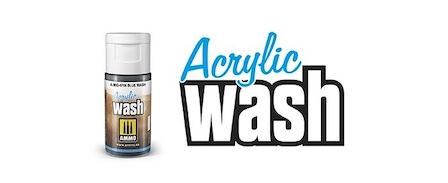
Acrylic Washes (15ml)
Acrylic Washes – easy detail enhancement without enamel thinners
AMMO Acrylic Washes are ready-to-use, highly fluid paints designed to enhance recesses, panel lines, rivets, edges, and other details on your models. Simply apply them with a brush to the desired areas – there is no need to find the correct dilution ratio or mix the wash yourself beforehand.
Compared with enamel washes, they dry faster, can be used without strong odours, and water can be used for both thinning and everyday clean-up. This makes them ideal for simple and quick weathering of miniatures, vehicles, military models, sci-fi models, terrain, and dioramas.
Black Wash, Dark Wash, Dark Brown, Neutral Grey, or Deep Grey can be used for recesses, panel lines, and shading. Choose the shade according to the model's base colour and the level of contrast you want to create.
Dust, Ochre, and other brown or sandy shades help create a dusty, earthy appearance. They are ideal for vehicles, undercarriages, terrain, and areas where dirt naturally accumulates.
Tracks Wash is ideal for tracks, Interiors Wash for interior details, Light Rust Wash for rusty tones, and Starship Wash for enhancing details on sci-fi and spacecraft models.
If you want a simple and quick solution without enamel thinner, start with an acrylic wash. Apply it with a fine brush into recesses and around details, and adjust or remove any excess before it dries completely. Washes flow best over a smoother satin or gloss surface. If you want more working time for adjustments, clean-up, and further manipulation of the effect, take a look at Enamel Washes as well.


