Grass & Plants
Grass & Plants – Grass, Moss, Bushes and Plants for Realistic Landscapes
Vegetation can transform a simple base or piece of terrain into a living natural scene. In this category, you will find materials for creating meadows, forests, overgrown ruins, wetlands, fields, bushes and dry landscapes – from static grass and ready-made tufts to moss, leaves, bushes, grass mats and detailed laser-cut plants.
You can combine different types of vegetation to match the environment and season. Low grass creates the foundation, tufts and moss break up uniform surfaces, bushes add volume, while laser-cut plants and leaves provide the finest details. Using the same techniques, you can create anything from a simple miniature base to a large, realistic diorama.
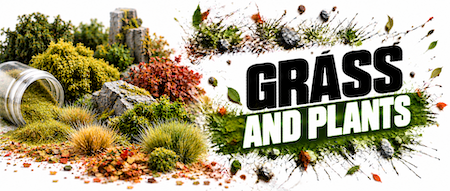
Grass Mats are ideal when you need to quickly cover larger areas of terrain with realistic vegetation. The grass mat can be cut or torn into irregular shapes and used for meadows, fields, roadsides, areas around buildings or larger natural dioramas.
Loose static grass gives you maximum control over the finished surface. You can combine different lengths and shades, create short lawns or overgrown areas, and adjust the density of vegetation to suit a specific miniature base, gaming table or diorama.
Ready-made tufts are an easy way to add three-dimensional vegetation to a model in seconds. They work well between rocks, along paths, around ruins or directly on miniature bases. Different green, dry and seasonal shades make it easy to match the tufts to the surrounding terrain.
Modelling moss creates low, irregular vegetation suitable for forest floors, damp areas, rocks, tree trunks, ruins and overgrown structures. Combining several shades can create more natural transitions between grass, soil and denser vegetation.
Fine Bushes add volume and height to a scene that grass alone cannot provide. Use them for shrubs, forest edges, hedges, overgrown paths, embankments or areas around buildings. Smaller irregular pieces usually look more natural than one large continuous bush.
Miniature leaves are ideal for forest bases, autumn landscapes and overgrown corners. Scattered around trees, rocks or walls, they help visually connect different terrain elements and add subtle texture that is especially noticeable when viewed up close.
Laser-cut plants allow you to create detailed ferns, sedges, reeds and other recognisable types of vegetation. They are ideal for forest undergrowth, wetlands, riverbanks, ditches and locations where you want to give the scene a more distinctive botanical character.
Scenic Mats combine different types and heights of vegetation into a ready-made surface. They are practical for larger dioramas and gaming terrain where you need to quickly create a varied meadow, wild field or overgrown landscape without placing every individual element separately.
Your choice of colour can dramatically change the atmosphere of the entire scene. Bright and vibrant greens suggest spring or summer vegetation, muted green-brown tones are ideal for late summer and autumn, while dry beige and brown shades can create steppes, scorched battlefields or neglected landscapes.
Avoid covering the entire surface with a single type of grass in the same height and shade. Start with a base layer of soil or texture, then gradually build up the vegetation. Use static grass or a Grass Mat for larger areas, add irregularly placed tufts and moss to selected spots, and finish with bushes, leaves and individual plants. Combining different heights, shades and densities creates a much more natural result. Concentrate vegetation around rocks, walls, water and the edges of paths, while leaving some areas of soil visible.