
Moss
Garden Center – Moss for Realistic Moss and Forest Vegetation
Modelling moss is ideal for creating fine, low-growing vegetation on miniature bases, dioramas and gaming terrain. It helps recreate damp forest floors, overgrown rocks, old walls, ruins, tree trunks and areas where vegetation naturally grows in cracks and around other terrain features.
Moss works best as part of layered vegetation. Combine it with soil, rocks, static grass, grass tufts, bushes and leaves to create a natural transition between bare ground and taller vegetation. Small, irregular patches of moss often look more realistic than covering the entire terrain evenly.
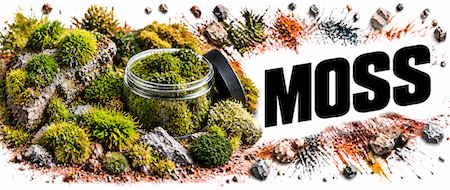
Use moss between roots, rocks and fallen leaves to create a fine layer of low-growing vegetation. It is ideal for forest bases, fantasy landscapes and dioramas where grass alone can look too uniform.
A small amount of moss along edges and in rock crevices helps create the appearance of an old, damp environment. Concentrate it mainly in recesses and sheltered areas rather than covering the entire rock surface evenly.
Moss is perfect for overgrown ruins, stone walls, steps, paving and other structures exposed to the elements. Placing it in cracks, corners and around building foundations helps visually blend the structure into the surrounding terrain.
A fine layer of moss gives old trunks, fallen trees and stumps a more natural appearance. Combine it with brown wood tones, soil and fallen leaves to create a forest environment with greater colour and textural depth.
On a small miniature base, just a few patches of moss between rocks or grass tufts are enough. This detail helps break up a uniform surface and adds extra texture to the scene without allowing the vegetation to overpower the miniature itself.
For the most natural result, combine several layers of vegetation. Start with soil and rocks, add moss, followed by grass and tufts, and finally complete the scene with leaves, bushes or individual plants to suit the environment you are creating.
First complete the basic terrain surface and decide where moss would naturally grow – for example in shaded areas, around rocks, near roots, in wall cracks or on damp parts of the scene. Apply a small amount of suitable adhesive to the selected areas and place the moss in irregular patches. Avoid covering the entire surface evenly. For a more realistic result, combine different shades of vegetation and leave areas of soil, rock or the original surface visible between the moss.


